Tibetan Identity at Home
རྩ་བ་སྔོན་ལམ། བོད་རིགས་ཁྱིམ་ནས་སྐྱོང་བ།
Identity Is Not a Burden — It Is Stability
Many Tibetan parents carry a silent worry:
“If I emphasize Tibetan identity, will my child feel restricted in the modern world?”
This fear comes from love, but it misunderstands identity.
Identity does not limit a child.
Lack of identity does.
Children without roots often:
- Seek belonging in unstable places
- Feel pressure to conform
- Lose confidence when challenged
- Struggle with meaning
Strong roots create emotional stability, not rigidity.
Why Identity Matters More in Times of Change
In stable eras, identity feels optional.
In unstable eras, identity becomes essential.
We are living in a time where:
- Culture is diluted by global media
- Language is replaced by convenience
- Values are shaped by trends
- Belonging is temporary
In such times, children ask internally:
- “Who am I?”
- “Where do I belong?”
- “What do I stand on?”
If parents do not answer these questions gently, the world will answer them loudly.
Tibetan Identity Is a Living System
Tibetan identity is not:
- Only clothing
- Only festivals
- Only religion
It is a living system of:
- Language
- Ethics
- Symbolic thinking
- Storytelling
- Ritual and rhythm
- Relationship with suffering and compassion
This system developed to train human beings, not just preserve tradition.
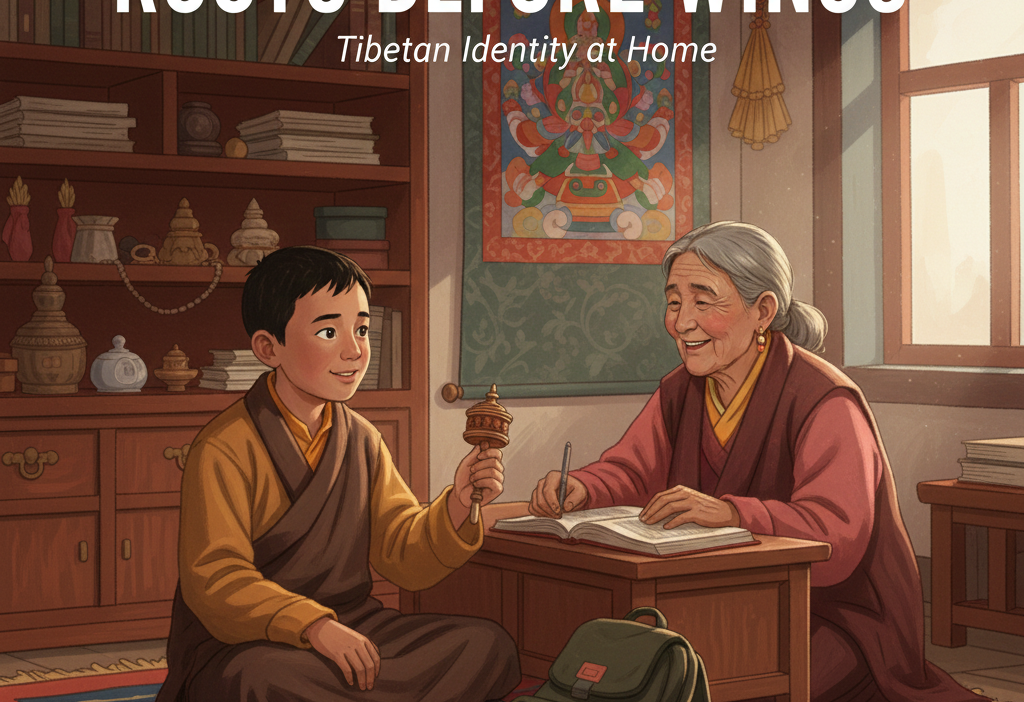
The Home Is the First Monastery and the First School
Children do not learn identity from textbooks.
They learn from:
- How parents speak
- What language is used at home
- How elders are treated
- What stories are told
- How suffering is explained
- How joy is shared
A home quietly teaches more than any institution.
Language: The Root of Thought
Language shapes:
- How children think
- How they feel
- How they understand the world
Even partial Tibetan language exposure:
- Creates cultural familiarity
- Strengthens identity
- Keeps ancestral memory alive
Parents do not need perfection.
Consistency matters more than fluency.
Speak what you can.
Sing what you know.
Let language live naturally.
Culture Without Pressure
One of the greatest mistakes parents make is forcing culture.
When culture is forced:
- Children resist
- Identity feels heavy
- Shame replaces pride
When culture is lived gently:
- Children absorb naturally
- Curiosity grows
- Pride forms quietly
Culture should feel like home, not obligation.
Ritual as Emotional Safety
Simple rituals create rhythm and grounding.
They teach children:
- Life has cycles
- There is meaning beyond chaos
- Stillness is allowed
Examples:
- Lighting a butter lamp
- Short morning prayers
- Gratitude before sleep
- Seasonal observances
Ritual does not need explanation.
Presence is enough.
Storytelling: Transmitting Wisdom Without Lectures
Traditional Tibetan stories teach:
- Compassion
- Karma
- Courage
- Humor
- Impermanence
Stories bypass resistance.
Children may forget instructions.
They remember stories forever.
Tell stories:
- At bedtime
- During travel
- During meals
This builds identity effortlessly.
Identity and Openness Can Coexist
Strong identity does not create narrow minds.
In fact:
- Rooted children adapt better
- Confident children are more open
- Secure identity allows curiosity
Teach children:
“Being Tibetan is not about separation.
It is about contribution.”
Protecting Identity in a Digital World
Digital spaces are powerful teachers.
Without grounding, children may:
- Mimic online behavior
- Devalue their own culture
- Seek validation externally
Parents must:
- Limit digital overwhelm
- Balance screen time with cultural time
- Model pride without superiority
Identity must be experienced, not defended.
What Happens When Roots Are Strong
Children with strong roots:
- Face discrimination with resilience
- Carry dignity
- Are less anxious
- Make ethical choices
- Walk confidently in diverse environments
Roots do not chain children.
They support flight.
A Simple Practice for Parents (Module 2)
Cultural Presence Moment
Once a day, do one small thing:
- Speak Tibetan
- Share a story
- Light a lamp
- Explain a symbol
No explanation needed.
Let it be natural.
Questions for Parental Reflection
- What parts of Tibetan culture feel alive to me?
- What do I practice joyfully, not out of duty?
- How do I speak about my culture — with pride or fear?
- What do I want my child to feel when they hear “Tibetan”?
What This Module Prepares You For
By grounding identity at home, parents are ready to:
- Teach emotional intelligence (Module 3)
- Introduce meditation naturally
- Engage with AI without losing values
- Guide future paths with confidence
Identity is the container for all learning.
Core Teaching to Carry Forward
Roots are not what hold children back.
Roots are what keep them standing
when the winds change.
Closing Blessing for Module 2
May roots grow deep and gentle.
May culture remain alive in daily life.
May children walk proudly
without hardness or fear.བཀྲ་ཤིས། བདེ་ལེགས།
👉 Continue to Module 3
Emotional Intelligence Through Dharma